


 Lifetime Warranty
Honest Copper Casserole pan
Copper pans without the homework.
Details
Copper without the homework: a casserole pan that works on induction, with no tin lining and nothing to re-tin.
You already know the rules of traditional copper. Not on induction. A tin lining that melts if you run it too hot and wears through over time, and once it does, the copper underneath reacts with tomatoes, lemon and wine. Polish it or watch it go brown. Send it away for re-tinning when the lining gives out. Every one of those rules is true of traditional copper. All but one are false of this pan: there is no tin anywhere in it, the cooking surface is bare, non-reactive metal, so acidic food is fine, and there is nothing to melt, wear through or re-line.
Heat first, then oil, then food, the way any bare-metal pan cooks. Stews, braises and slow simmering. Brown first, then bring the liquid in; the surface takes tomatoes and wine without complaint.
Why you'll love it:
- Induction compatible: the base works on induction, and on gas and electric too
- No tin lining: nothing to melt, nothing to wear through, nothing to re-tin
- Acidic food is fine: tomatoes, lemon and wine never touch the copper
- The one rule that stays: it darkens with use; lemon and salt brings it back, or leave it
Available in three sizes: 24 cm, 26 cm and 28 cm. Works on gas, electric and induction hobs. Hand wash. Warranty in writing.
Copper on the outside, a multi-metal body underneath built to spread heat across the base and work on induction, and a non-reactive cooking surface with nothing sprayed on it. We describe the construction as a whole rather than as a layer list, and we would rather say that plainly than pretend otherwise. Traditional copper is a fine thing on a gas hob for someone who enjoys the upkeep. This pan is for the kitchen that has neither.
Shipping & Returns
Free shipping on every order, with delivery in 7-9 business days. Not in love with it? Return within 30 days for a full refund, no questions asked.
Care Instructions
Hand wash with warm water and a little soap, and dry it rather than leaving it to drip. Copper darkens with use; two minutes with half a lemon and a pinch of salt brings it back, or leave it. Heat the pan before the oil goes in, and use medium heat for most cooking; copper responds quickly, so you rarely need more.
Copper that works on induction.
I had almost given up on buying copper cookware after switching to induction. Seeing copper heat up on my induction hob was the reason I finally ordered copper cookware.
David T.
What I was looking for.
I love copper but never wanted to deal with tin linings and re-tinning. Copper gives me the copper exterior I wanted with a more practical cooking surface.
Emma R.
No tin lining to worry about.
I researched copper for months and kept talking myself out of it. Not having a tin lining was what finally made this version practical enough for me.
Jack M.
Perfect for my induction kitchen.
I always assumed a real copper pan was something I couldn’t use because we have induction. This copper works on our hob and looks fantastic sitting on it.
Lily T.
The problem
Everything you were told about copper. None of it applies here.
Not on induction. A tin lining that melts and wears through. No tomatoes once it does. Polish it or watch it go brown. Every one of those is true of traditional copper. All but one are false of this pan.
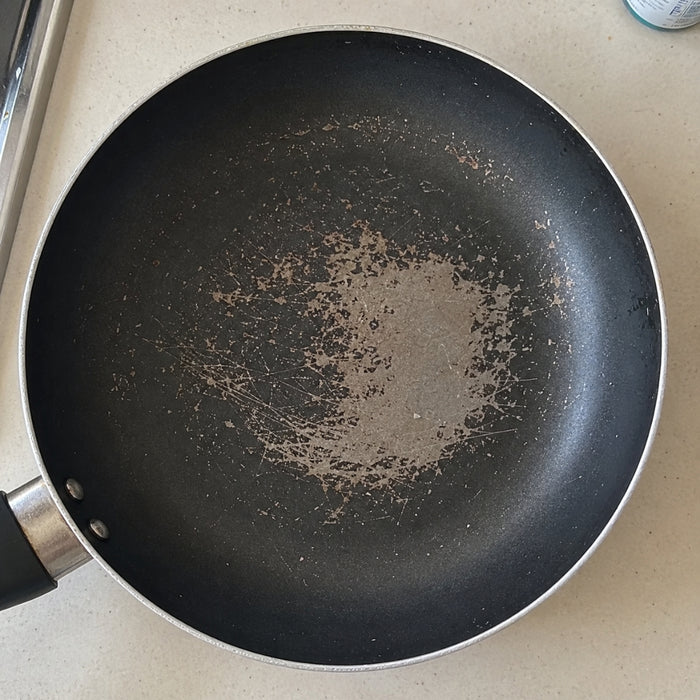
"Not on induction"
Solid copper is not magnetic. Every recommendation thread says the same thing: unless you cook on gas, don't even think about it.
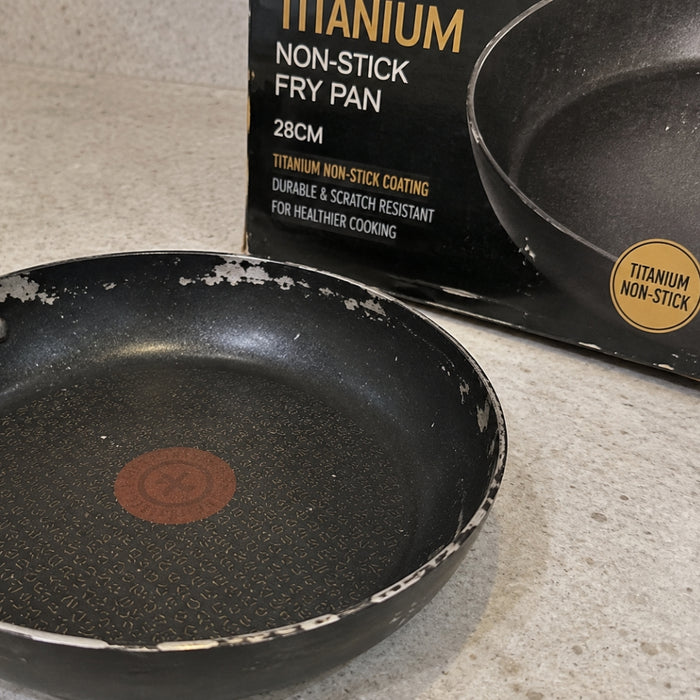
"The tin wears through"
Copper cannot be a cooking surface, so traditional copper is lined with tin. Tin melts just above the smoke point of oil, cannot take a metal utensil, and eventually has to be re-done by a specialist.
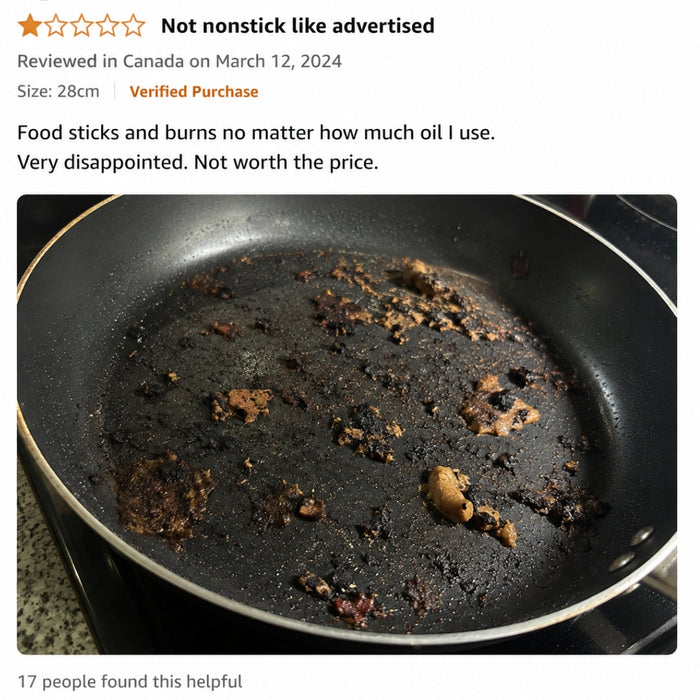
"Polish it or watch it go brown"
"Polish it or watch it go brown" is why so many copper pans end up hanging on a wall instead of sitting on a hob.
The Solution
Copper without the homework.
Copper on the outside, a multi-metal body underneath, a non-reactive cooking surface with nothing sprayed on it. Works on induction. No tin. Here is the list, crossed out.
Works on induction
No tin lining, nothing to re-tin
Tomatoes, lemon and wine are fine
A real copper pan.
It still darkens. You just don't have to polish it.
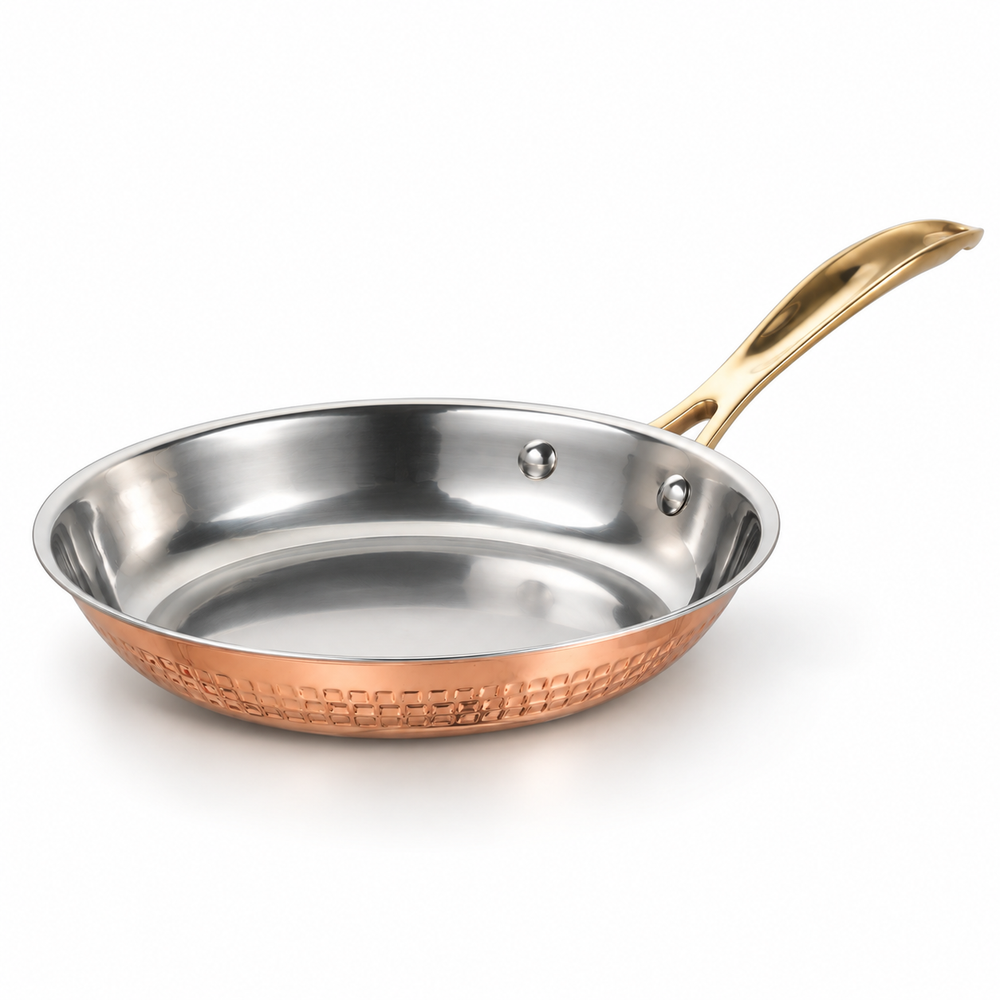
See it in action
On induction, not on gas
The pan traditional copper cannot be: on an induction hob, with a tomato sauce in it.
Why Gonest?
See how we compare.
Here is an honest comparison with the pan you were going to buy instead.
 Gonest
Trusted by home cooks
See who went before you
Reviews from verified buyers
“Copper without the fuss. This feels like a way to own copper cookware. You still get the copper exterior but the inside is much easier to live with day to day.”
“Tomato sauce was no problem. One of my meals was a tomato-based sauce because I wanted to see how practical the copper pan really was. No issues at all and cleanup afterward was simple.”
“Made copper practical for me. I loved copper pans aesthetically. Always considered them too specialized. This is the copper I’ve felt comfortable using as normal everyday cookware.”
“I actually use it every day. I didn’t want a pan that I’d be scared to cook in. I’ve used this copper for eggs, vegetables, sauces and weeknight dinners. It doesn’t feel precious.”
“The patina is part of it. The copper does darken with use. Personally I think it looks better that way. When I want it bright again a quick polish brings most of the shine back.”
“Surprisingly practical. Copper always seemed like cookware for people to spend half their life maintaining it. This copper has been much easier to own than I expected.”
Frequently asked questions
Is the outside real copper?
What is the body made of?
How thick is the copper?
Does it work on induction?
Will it tarnish?
Can I cook acidic food in it?
How do I look after it?
How is this different from a traditional copper pan?
Is it nonstick?
Still have a question? Contact us →
Ready to upgrade?
Make the switch today.
Join 10,000+ home cooks who ditched their toxic, throwaway pans.