6 Reasons Why Thousands Of Health-Conscious Families Are Switching To Titanium Cookware
About this guide
Looking after your well-being is a series of everyday choices, including the meals you make at home. This guide takes a closer look at another part of that routine: the surface your food cooks on. We explain what an uncoated titanium cooking surface is, how it differs from coated cookware, and what to expect in your kitchen, so you can choose with a clearer understanding.
You make choices for your health. Have you looked at what you cook on?
You read ingredients, choose fresh food and put care into the meals you make. Maybe you even take health supplements. The surface you cook on deserves a look too. Here are six things to know about uncoated titanium, from the material your food touches to how it fits your daily routine.
Reason #1
Your ingredients are only part of the picture
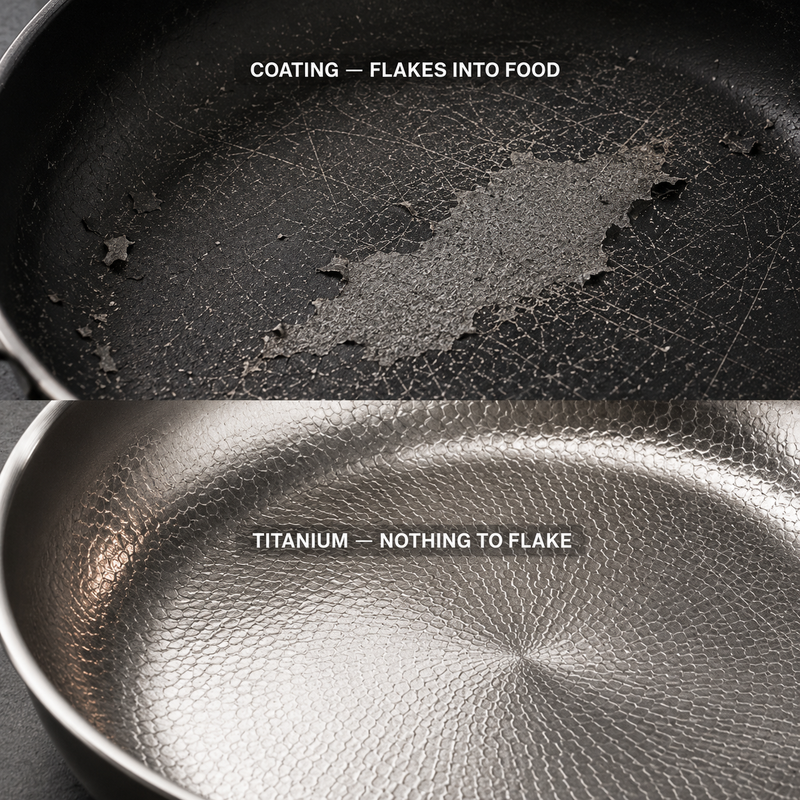
You can put real thought into what goes into a meal and still know very little about the pan underneath it. When you care about your well-being, wanting to understand both is a natural next step.
Many nonstick pans use a coating over a metal body. That layer can wear or become damaged over time, depending on the coating, cooking habits and care. Scratches or peeling often prompt a simple question: what exactly is this surface made of?
An uncoated pan gives you a different option. There is no applied nonstick coating to maintain. For Gonest, the cooking surface is Grade 1 titanium: a specific material you can identify before you bring it into your kitchen.
How do I know if a coating is wearing?
Check for visible peeling, flaking or changes to the surface, and follow the pan manufacturer's care and replacement guidance. Appearance alone cannot tell you whether a pan poses a health risk.
What should I do if my current pan is scratched?
Check the manufacturer's guidance for that particular pan. Different surfaces have different care requirements. If you prefer cookware without an applied nonstick coating, an uncoated titanium cooking surface is an option to consider.
Reason #2
Know the surface your food touches
Choosing cookware can feel simpler when the material is clearly explained. Gonest has an uncoated Grade 1 titanium cooking surface.
That means your food cooks against titanium, rather than a PTFE or ceramic nonstick coating applied over it. The pan has a multi-metal body underneath; the whole pan is not solid titanium.
For anyone who prefers to cook without an applied nonstick coating, that is a concrete reason to choose it. There is no nonstick layer on the cooking surface to peel or flake.
Handcrafted in Japan, it brings that straightforward material choice into the meals you already enjoy making. A familiar routine, with a cooking surface you understand.
What exactly is the cooking surface made of?
Grade 1 commercially pure titanium, left uncoated. It is the food-contact surface, supported by a multi-metal body. It is not a titanium-reinforced nonstick coating.
Does it have a PTFE nonstick coating?
No. The cooking surface is uncoated titanium. It does not rely on an applied PTFE or ceramic nonstick layer for cooking performance.
Reason #3
Peace of mind starts with clear answers
When you are choosing cookware with well-being in mind, broad words such as "clean" or "non-toxic" can leave you with more questions. A material description tells you more about what you are actually buying.
Start with two questions: what is the food-contact surface made of, and is there an applied coating on top? A pan described as "titanium" may use titanium in a coating, so the word alone does not tell the whole story.
Ceramic nonstick also usually refers to a coating over metal, rather than a pan made entirely from ceramic. And "PFOA-free" does not, by itself, establish that a product is free of every PFAS. Check the specific materials and any testing behind the claim.
Gonest's answer is direct: an uncoated Grade 1 titanium cooking surface. Choosing a material you can identify is one way to make a considered decision about the cookware you use every day.
Is ceramic nonstick the same as uncoated cookware?
No. Ceramic nonstick cookware typically uses a ceramic-based coating over a metal body. Uncoated titanium has no applied nonstick layer. These are different constructions; the distinction alone does not establish a health benefit.
Does "PFOA-free" mean it is PFAS-free?
Not necessarily. PFOA is one substance within the wider PFAS group. A PFOA-free claim does not rule out all other PFAS. Look for the exact material information and the scope of any test report.
What should I ask a cookware brand?
Ask what your food touches, whether that surface has an applied coating, and what evidence supports the material claims. Then check the cooking and care instructions. Clear answers help you choose a pan that fits your priorities.
Reason #4
For people who read the label first

You do not have to become a cookware expert to make a thoughtful choice. But you deserve more than a reassuring label when you are buying something for the meals you make for yourself and the people you care about.
Start with what matters to you: a clearly identified cooking surface, a size that suits your meals, and care instructions you can follow. Gonest brings those details together so you can decide whether uncoated titanium fits your kitchen.
Take a moment to read the product details and current return terms before ordering. Confidence comes from knowing what to expect, both when the pan arrives and when you cook your first meal.
What should I check before ordering?
Check the pan size, your stovetop compatibility, the cooking guidance and the current delivery and return terms. Read customer reviews alongside those details, paying attention to how people cook and care for their pans.
Reason #5
Made for the ingredients you enjoy
Fresh tomatoes, a squeeze of lemon, garlic and herbs. The meals you enjoy should stay at the centre of your routine, with cookware that suits the way you like to cook.
Titanium is valued for its resistance to corrosion. The uncoated cooking surface is suitable for everyday cooking with acidic ingredients such as tomatoes and lemon, when used according to the care instructions.
It is still cookware that needs normal care. Clean away food and oil residue after use and follow the recommended heat guidance. Choosing an uncoated surface does not mean you need a complicated new approach to dinner.
Can I cook tomatoes and lemon in it?
Yes. You can use acidic ingredients such as tomatoes and lemon in everyday cooking. Follow the pan's cooking and cleaning instructions, and transfer leftovers to a suitable storage container.
Can the surface discolour or retain food residue?
Heat, minerals and cooking oils can leave marks or residue on metal cookware. Clean the pan after use and follow its care guidance. An uncoated surface is not a promise that the pan will always look brand new.
Reason #6
A simple routine for your everyday meals
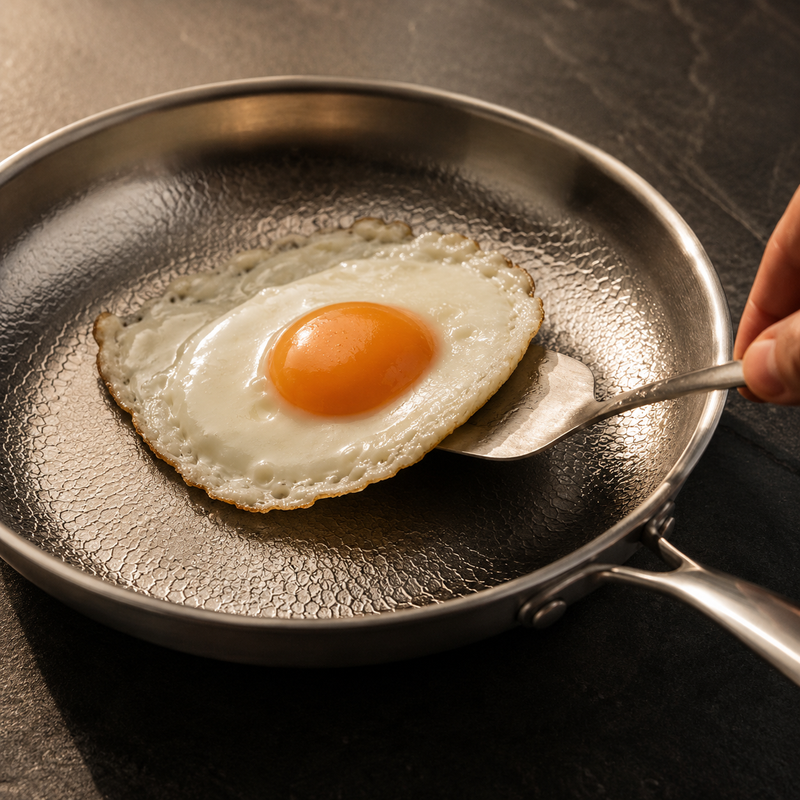
The practical question matters: how does an uncoated pan feel to cook with? It is different from a coated nonstick pan, and knowing that before your first meal makes the transition easier.
Preheat as directed, add a little oil or butter, then add the food. Control the heat and give ingredients time to cook before turning them. Food can stick, especially if the temperature, timing or amount of fat is not right.
The appeal is a clearly identified cooking surface and a routine you can learn. Once you are familiar with it, you can focus on the meals you enjoy making, without an applied nonstick coating to maintain.
Do I need to change how I cook?
You may need to adjust your heat and timing. Follow the preheating instructions, add cooking fat and avoid moving food too early. Start with a familiar meal while you learn how the pan responds.
See who went before you
Reviews from verified buyers
“I already put a lot of thought into the ingredients I cook with, but I had never really considered the surface underneath them. After noticing scratches on my old pan, I wanted something I could understand clearly. Knowing my food touches uncoated Grade 1 titanium gives me the peace of mind I was looking for.”
“I switched to ceramic because I wanted to make a more considered choice for my kitchen. When that coating eventually began to wear, I realised I still had the same question: what is my food actually touching? This time I chose an uncoated titanium surface, and that straightforward construction made the difference for me.”
“Cookware labels can sound reassuring without explaining very much. I contacted GONEST and asked exactly what the cooking surface was made from. The answer was refreshingly clear: uncoated Grade 1 titanium, supported by a multi-metal body. That transparency helped me feel confident about my choice.”
“An honest review: this pan has a small learning curve. I preheat it, add a little oil and give the food time before moving it. Once I understood the routine, cooking became straightforward. I appreciate that GONEST explains this clearly, it helped me choose the material I wanted without pretending it behaves like coated nonstick.”
Last chance to save
This limited-time deal is in high demand.
Frequently asked questions
Is there any coating on the cooking surface?
No. The food-contact surface is uncoated Grade 1 titanium, with no applied nonstick coating. The pan has a multi-metal body underneath.
Does it use a PTFE nonstick coating?
No. Food cooks on uncoated titanium, rather than an applied PTFE or ceramic nonstick layer. For further material or testing details, contact Gonest before ordering.
Will food stick without a nonstick coating?
It can. Follow the preheating guidance, use oil or butter, control the heat and allow food time to cook before turning. Uncoated titanium does not behave exactly like coated nonstick cookware.
Can I cook acidic food in it?
Yes. It is suitable for everyday cooking with acidic ingredients such as tomatoes and lemon. Follow the cooking and care instructions and use a suitable container for storing leftovers.
Can I use metal utensils?
Yes, metal utensils can be used. Avoid cutting food in the pan or deliberately scraping the surface. Normal use may leave cosmetic marks; uncoated does not mean scratch-proof.
Is it dishwasher safe?
Yes. Follow the supplied care instructions and remove food residue before cleaning. Washing by hand is also an option for everyday care.
Does it stain or hold smells?
Food residue and cooking oils still need to be cleaned away. Metal cookware can develop discolouration or marks with use. Follow the cleaning instructions to keep the pan ready for your next meal.
What if it is not right for me?
Gonest offers a 30-day return window, subject to the current return policy and item-condition requirements. Check those terms before ordering; return postage is the customer's responsibility. Contact support@gonest.homes for help with a return.
© Gonest
Pure titanium. No coatings. No compromises.