6 Reasons Why Everyone Is Switching To Gonest Titanium Cookware


About the author
Daniel Hart spent years as a chef in kitchens across the world, where he watched plastic cutting boards do what plastic boards do: groove, shed and get replaced. When he began reading materials the way he reads ingredient lists, he found the category's quiet trick: most "plastic-free" titanium boards carry a polypropylene back dressed up as "wheat straw". That is when he stopped trusting front labels and started flipping boards over. Today he cuts on nothing but 100% Grade 1 Japanese titanium, both sides, and writes for people who read what things are made of.
A quiet revolution in the kitchen
For decades, plastic ruled the cutting board, and every knife stroke left a little of it behind. But a growing wave of home cooks and professional chefs is discovering what surgeons and aerospace engineers have known for years: titanium changes everything.
Reason #1
Flip your "plastic-free" board over
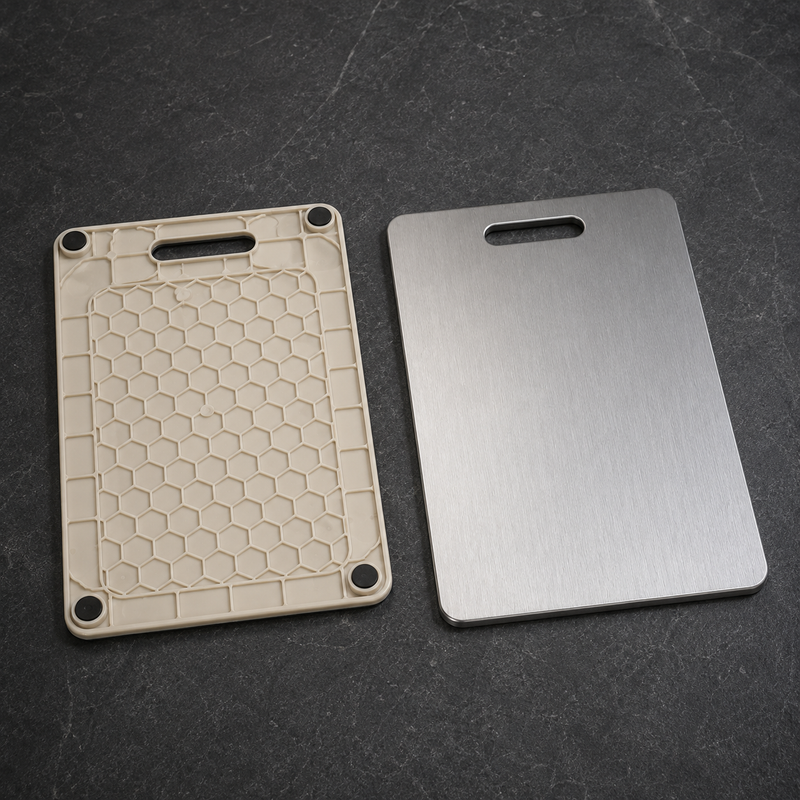
One question the "plastic-free" titanium boards hope you never ask: what is the other side made of? Flip most of them and the answer is polypropylene, marketed as "wheat straw". A plastic cutting surface bolted to the board you bought to stop cutting on plastic.
Buyers discover it the hard way, and their reviews say it plainly: the plastic side cuts easily, and pieces of it are going into the food. The surface you paid to leave, quietly reinstated on the back of the replacement.
It is also the reason most of those boards cannot go in the dishwasher. The metal side would be fine. The plastic side warps. The weakest material sets the rules for the whole board.
What is "wheat straw" actually?
Polypropylene with plant fiber mixed in. It photographs like a natural material and it is marketed like one, but it is a plastic, and it cuts like one.
Why do brands add a plastic side at all?
Cost. A thin titanium sheet on a plastic body is far cheaper than solid metal. The "wheat straw" story turns the compromise into a feature.
Reason #2
One material, both sides: 100% Grade 1 titanium
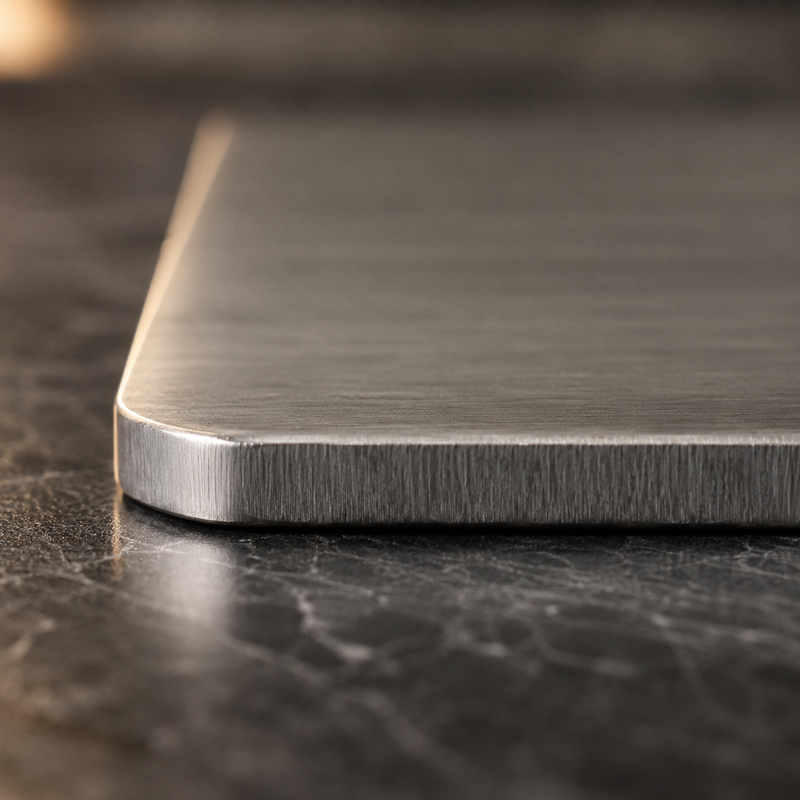
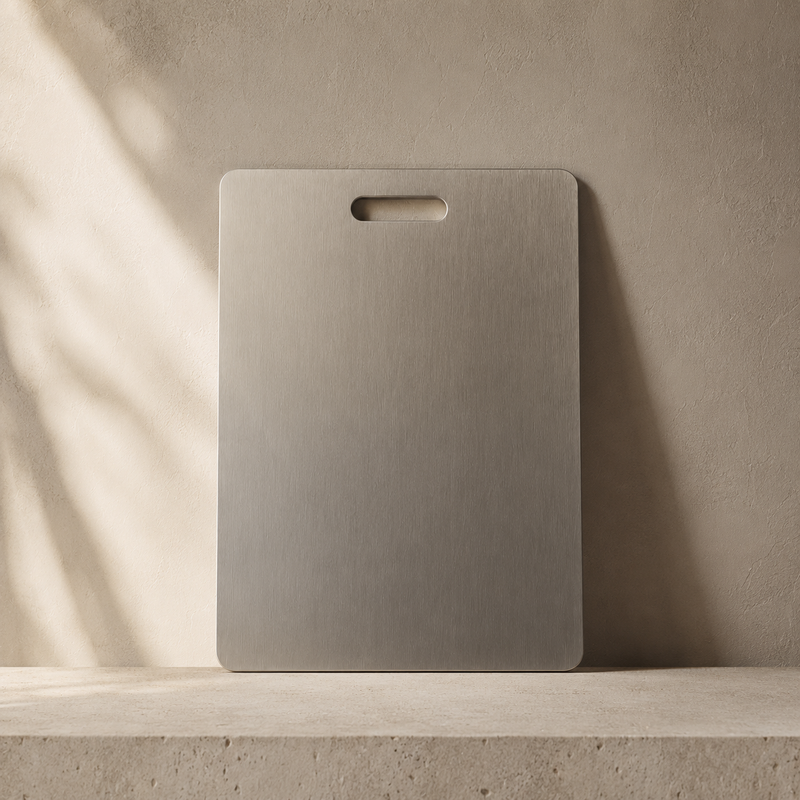
This board has the shortest materials list in the category: titanium. Both sides are the same solid 100% Grade 1 commercially pure metal, and both sides are cutting surfaces.
There is no polymer layer, no coating, no treatment, nothing that wears or flakes, because there is nothing on the metal at all. What touches your food is the material itself, on either side you choose.
You can verify that, not just read it. A magnet will not stick to titanium. The board weighs about 45% less than the same board in steel.
Every board is handcrafted in Japan, where titanium working is an established industrial craft, the same base that supplies the aerospace and medical fields.
What is the full materials list?
Titanium. That is the entire list. No base material, no surface layer, no bonded second side.
How do I know it is real titanium?
Three checks: a magnet will not hold, a kitchen scale confirms the weight titanium should have, and the independent lab certificate.
Reason #3
No grooves. Nothing goes in, nothing comes out.
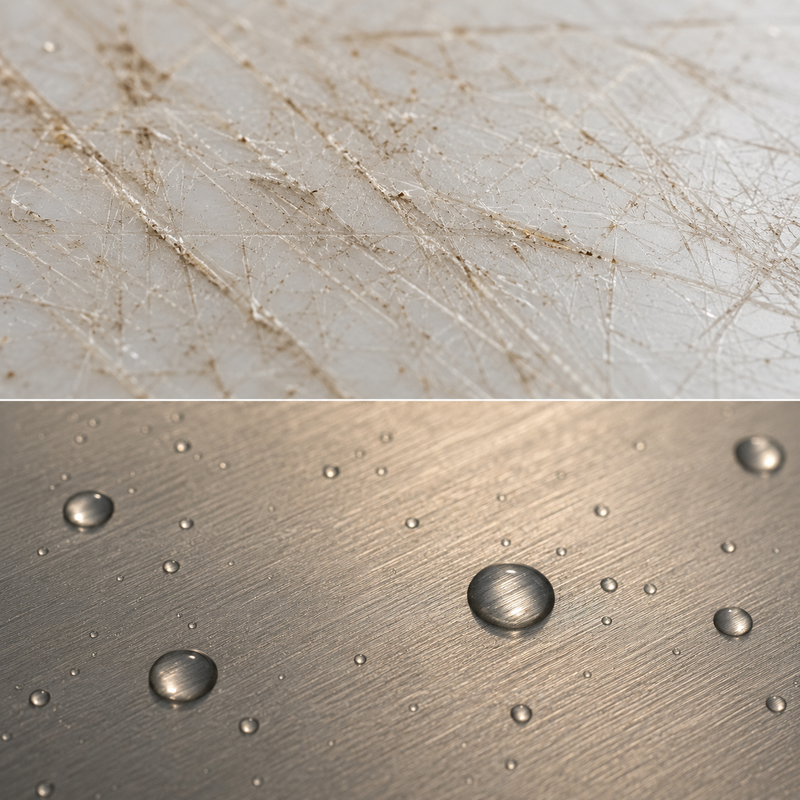
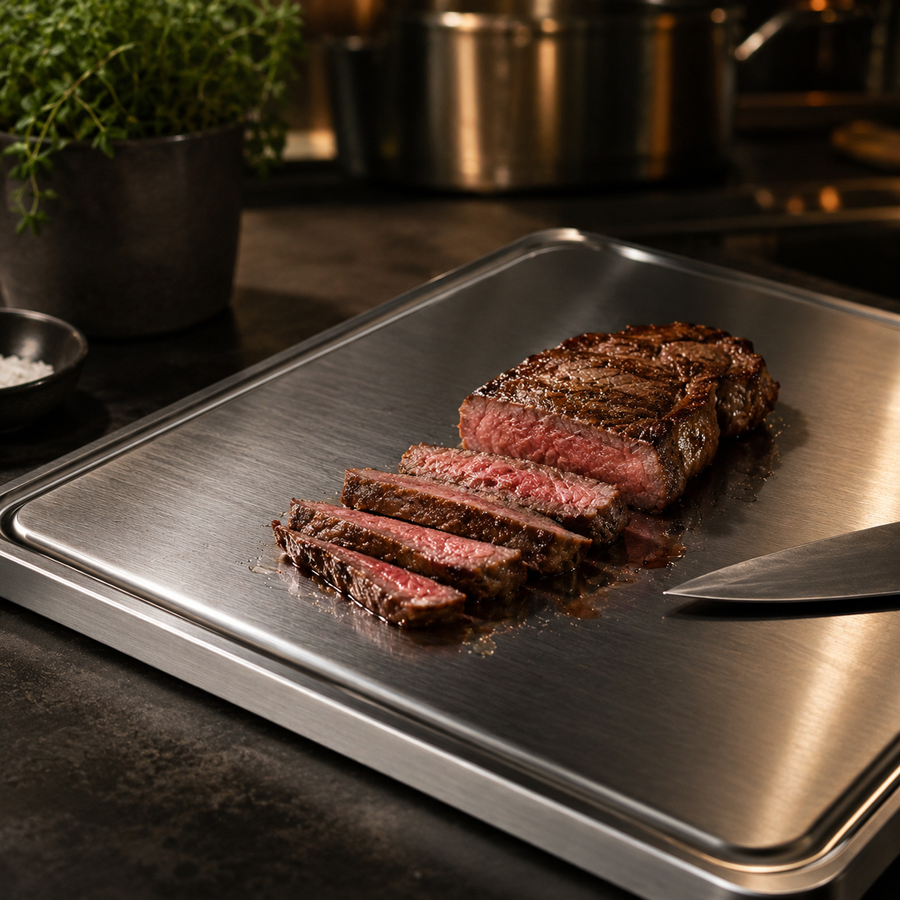
The real problem with plastic boards was never the material on day one. It was the grooves: every knife stroke opening another line for juices to sit in, and every cut across an old groove taking a little of the board with it.
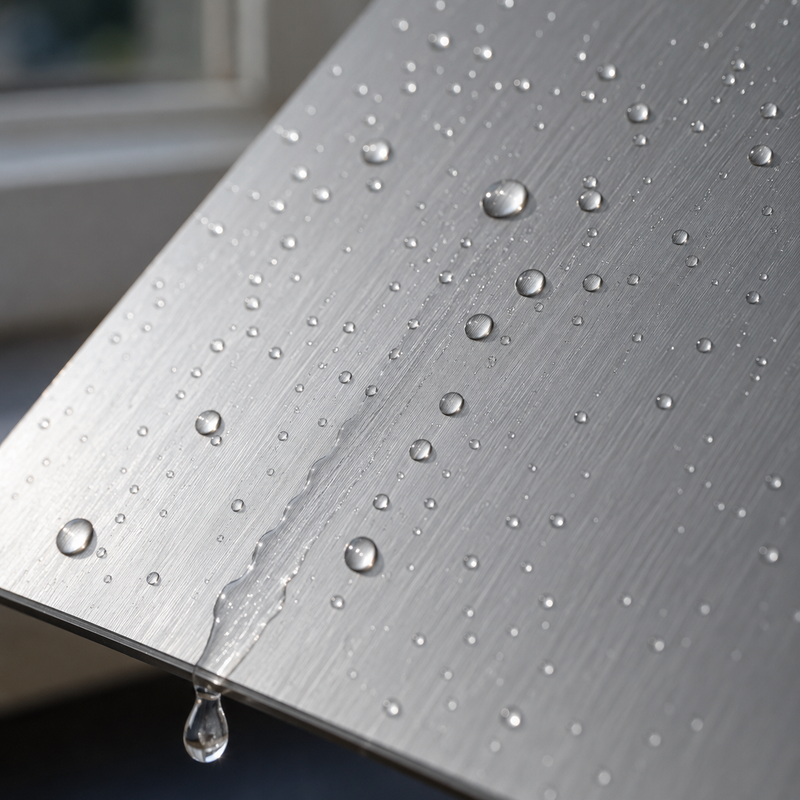
Titanium does not groove that way. The surface picks up light cosmetic marks over time, but the metal is non-porous, so nothing opens up, nothing soaks in, and nothing comes back out.
Juice and odor sit on top and rinse away. Garlic does not follow the strawberries. Raw chicken washes off completely, in seconds, from a surface with nowhere to hide.
Does it develop grooves like plastic?
No. It takes light surface marks, because titanium is softer than blade steel, but they stay cosmetic on a non-porous metal. Nothing opens up for food to sit in, and nothing sheds.
Is it better than wood?
Wood is a fine material with real upkeep: oiling, sanding, staying out of the sink. Titanium asks nothing and holds nothing. We will not overclaim beyond that; the difference is maintenance and porosity.
Reason #4
The dishwasher takes it, because there is no plastic side to warp
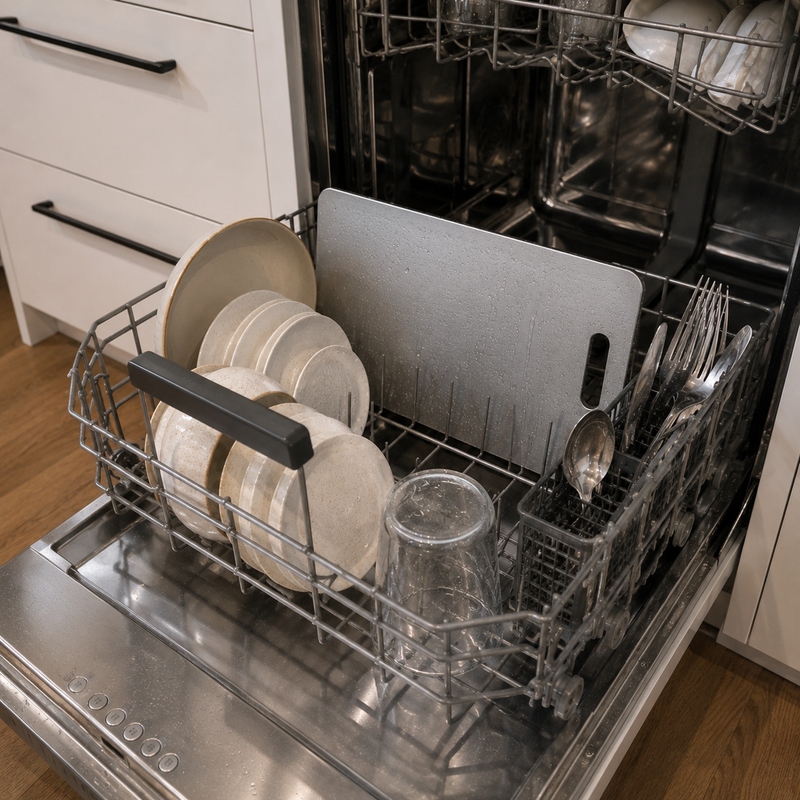
Check the care instructions on any "titanium" board with a wheat straw back and you will find the confession: hand wash only. The plastic side cannot take the heat, so the whole board loses the dishwasher.
This board has no weaker side. Solid titanium does not warp at kitchen temperatures and has no coating to protect, so it goes in the dishwasher after every use, for life.
Most days you will not even need it. The surface rinses clean in a couple of seconds under the tap, because nothing sticks to a board nothing can soak into.
Dishwasher safe every wash?
Yes, every wash, indefinitely. There is no plastic side to warp and no coating to degrade. The dishwasher promise holds because the whole board is one material.
Does it hold smells?
No. The surface is non-porous, so onion, garlic and fish rinse straight off. Odor needs somewhere to live, and there is nowhere.
Reason #5
Said precisely: we claim composition, not outcomes
This subject deserves precision, so here it is. The research that moved so many people off plastic measured particles shedding from plastic cutting boards during normal chopping. What those particles do in the body is still being studied.
So we will not sell you an outcome. We claim composition: there is no plastic in this cutting surface, on either side. No polymer layer, no coating, no fragments to shed, because the board is one inert metal through and through.
What that is worth is your call, which is exactly how it should be. You decided to stop cutting on plastic. Our job is simply to not quietly reverse that decision on the underside of the board.
What did the research on plastic boards actually find?
It measured that plastic boards shed particles into food during chopping, with estimates in the tens of millions of particles per year for a regularly used board. The health outcomes of that are still being studied, and we do not claim them.
Is this a health product?
No. It is a cutting board made of one material. The claim is what it is made of, verified by a lab certificate. What that composition is worth is a judgment we leave to you.
Reason #6
The decision you already made, kept
You made this decision once: no more plastic where the knife works. The only job of everything you buy after that decision is to keep it, without asterisks on the underside.
This board keeps it everywhere you check. Titanium on both sides. No coating at any layer, which also means no PFAS, no PTFE and no fluoropolymers, because there is no polymer of any kind. Inert with acidic food, lemon and tomato included. Dishwasher safe. Nothing on the metal, nothing off the metal.
One material, one decision, kept. That is the entire product.
Is it PFAS-free?
Yes, by composition rather than by promise. PFAS lives in coatings, and this board has no coating of any kind, so there are no fluoropolymers at any layer.
Can I cut acidic food on it?
Yes. Titanium is inert and non-reactive, so lemon, tomato and vinegar do not interact with the surface, leave no taste and cause no reaction.
See who went before you
Reviews from verified buyers
I flipped my old "titanium" board over the day this one arrived. Wheat straw back, which I now know means plastic. This one is metal on both sides. That is what I paid for.
The grooves were why I left plastic. Six months on this board and there is nothing my knife has opened up. It rinses clean in seconds.
I read materials lists the way I read ingredient labels. This is the first board where the whole list is one word.
Garlic does not follow the fruit anymore. And it actually goes in the dishwasher, unlike my last board with the plastic back.
Last chance to save...
This limited-time deal is in high demand.
Frequently asked questions
What is the other side made of?
Titanium. Both sides are the same solid 100% Grade 1 metal, and both sides are cutting surfaces. No wheat straw, no composite back.
Is "wheat straw" plastic?
Yes. Wheat straw board material is polypropylene with plant fiber filler. It is marketed as natural, but it is a plastic and it cuts like one.
Is the board really plastic-free?
Completely. The board is one material: 100% Grade 1 commercially pure titanium. No polymer layer, no coating, no plastic side, nothing bonded on.
Does it develop grooves?
No deep grooves. It takes light cosmetic marks because titanium is softer than blade steel, but the metal is non-porous, so nothing opens up, nothing soaks in and nothing sheds.
Is it dishwasher safe?
Yes, every wash, for life. There is no plastic side to warp and no coating to protect.
Does it hold smells or stains?
No. The surface is non-porous, so juice and odor sit on top and rinse away. Garlic, beets and raw chicken wash off completely.
What did the research on plastic boards find?
It measured particles shedding from plastic boards during normal chopping. What those particles do in the body is still being studied. We claim composition, not outcomes: there is no plastic in this cutting surface, on either side.
What if I don't love it?
You get a 30 day trial. Cut on it, flip it, run it through the dishwasher. If it is not right, return it for a full refund. The lifetime warranty covers the cutting surface, because the surface is the board.
© Gonest
Pure titanium. No coatings. No compromises.